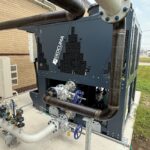
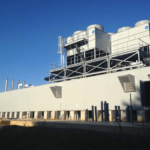
A trend we see in industrial construction is an increasing desire for factory-built Central Utility Plants (CUPs). Often referred to as “modular” or “Off-Site Construction”, factory-built systems are manufactured and constructed in large, indoor facilities, designed in modular components that are then shipped to the project site for installation and commissioning.

Factory-built systems offer significant benefits, but they are not a one-size-fits-all solution. Here are a few examples of when modular CUPs make sense, both with short- and long-term ROI.
Tight Project Timelines and Rapid Turnover – Similar to just-in-time inventory approaches, off-site constructed CUPs are constructed in advance and arrive on site ready to install and commission. This greatly reduces pressure on project schedules and resources, since the plant is manufactured in parallel with on-site construction activities. Schedule surety is particularly important when there is rapid turnover of an existing system, since the factory-built approach minimizes the duration and operational risks associated with shut-downs.
Weather Impacts – Weather delays are a variable and unpredictable risk for any job site. By shifting CUP construction to a controlled, indoor facility, weather-related risks are significantly reduced.
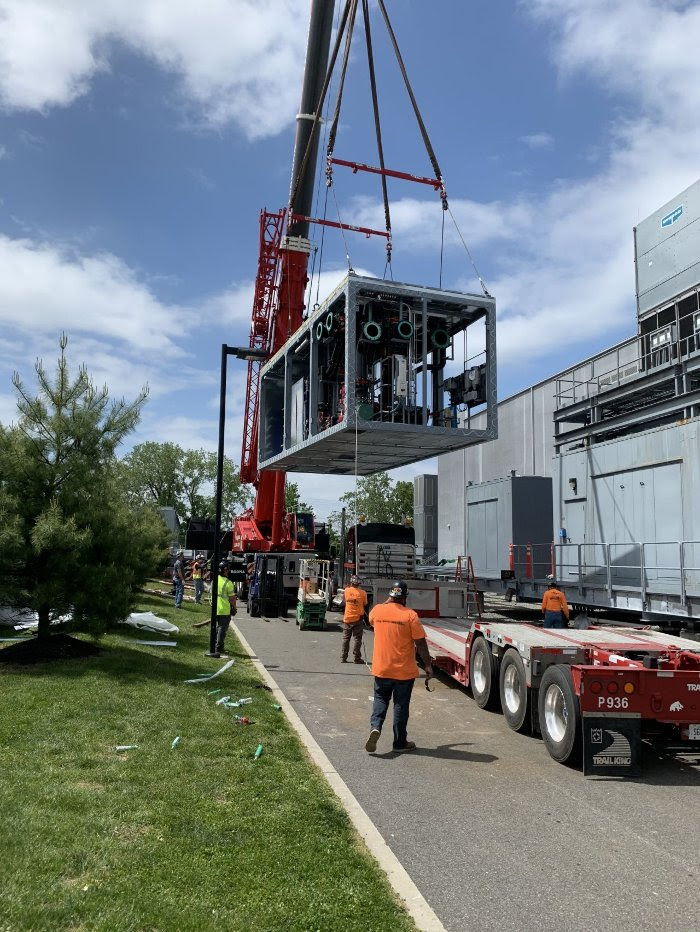
Site Impact – Utilizing a factory-built CUP reduces the transportation, logistics and project site impacts that occur with traditional “sticks and bricks” construction. The CUP arrives in modular units, ready to be lifted into place and assembled. This allows for consolidating deliveries and minimizing laydown requirements. As a result, modular CUPs are a particularly effective solution in dense, urban environments.
Workforce Challenges and Jobsite Safety – Utilizing factory-built systems shifts production hours to a controlled, off-site environment with consistent, repeatable processes, established safety programs, and experienced, on-hand tradespeople. This benefit adds significant value in remote locations where there are limited tradespeople available, or labor costs are exceptionally high.
Other factors that may influence choosing a factory-built CUP over traditional construction include quality control, streamlining collaboration and communication, and LEAN and ESG construction initiatives.
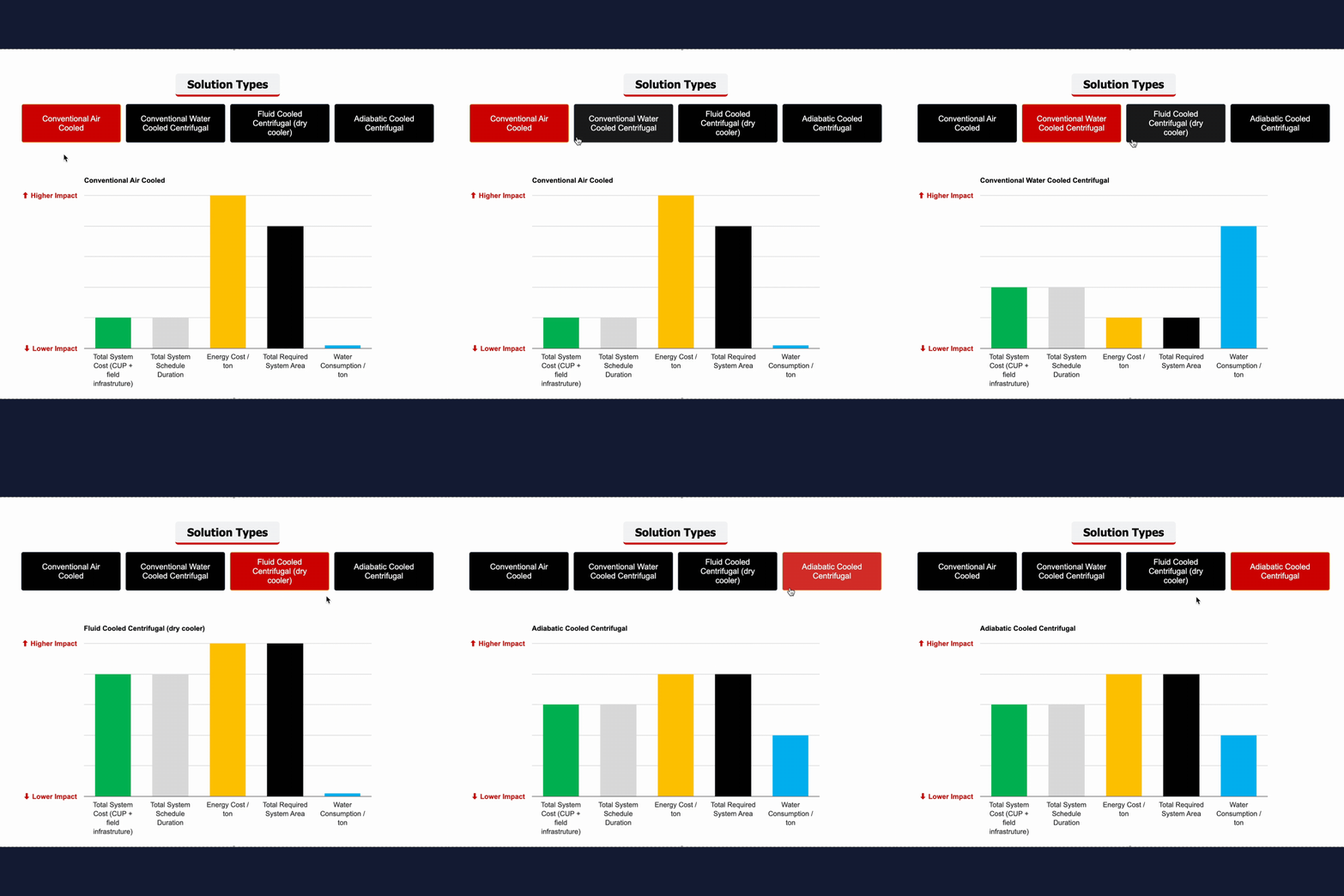
In addition to factory-built considerations, the Climate Technologies team designs systems that address other factors, including water consumption, energy consumption, total project duration, the available space (area required), and the total system cost. Water availability may push a project toward one type of chilled water system, while space and costs could override the water constraint. Our comparison article and interactive chart, here, help explain chilled water options and tradeoffs.
Of course each project has nuances that may sway the decision in one direction or another, including life after construction. That’s why it’s critical to get an experienced team involved early in the project. The Climate Technologies team works with each project to develop the right system that balances capital expenditures, lifetime operational costs and initial construction. Contact Climate Technologies today to explore if a factory-built central utility plant is right for your next project.