
Comparing Chilled Water System Options
Which Cooling Approach is Right for Your Project?
Selecting the correct solution for a chilled water Central Utility Plant rarely involves a single consideration. Factors impacting the decision include water consumption, energy consumption, total project duration, the available space (area required), and the total system cost. Water availability may push a project in one direction, while space and costs could override the water constraint.
Climate Technologies and our strategic partner Epsilon developed a matrix to help evaluate the pros and cons of four typical chilled water solutions. The interactive chart below shows the relative impacts of each option, with higher numbers representing higher impacts.
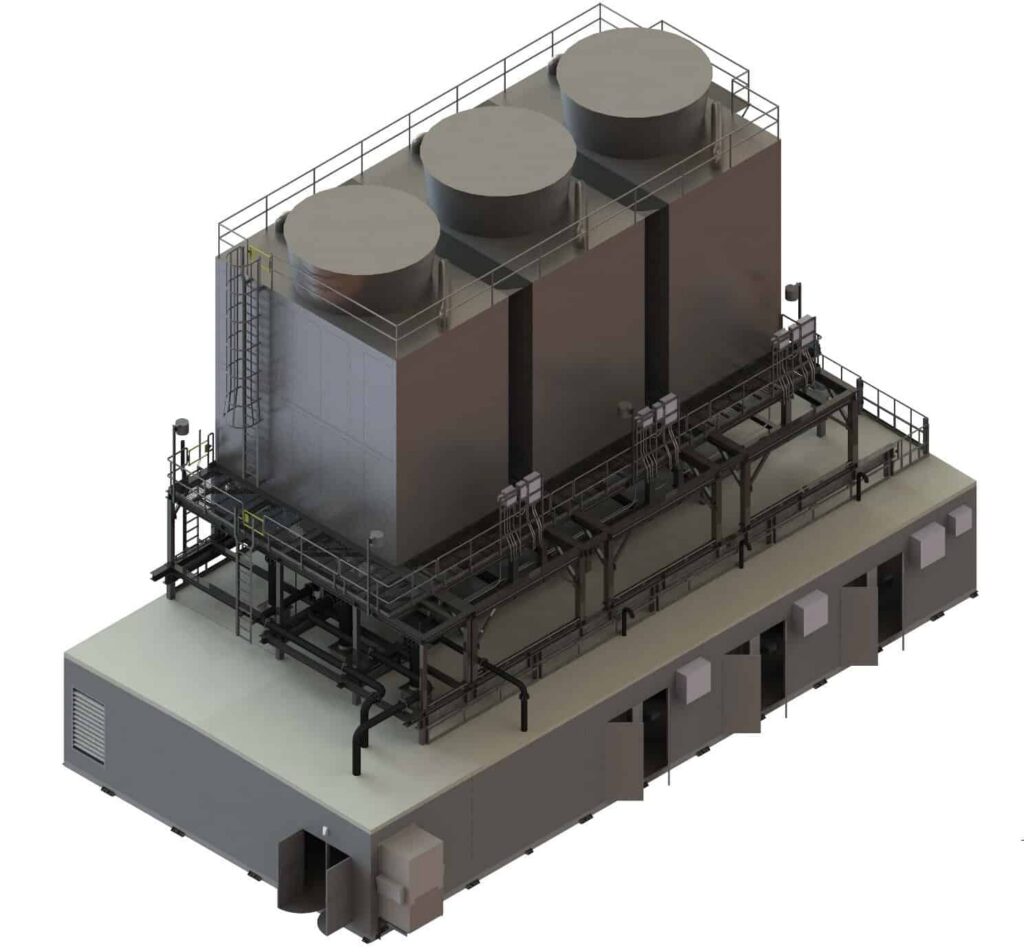
Water Cooled Chiller Plant
Air Cooled Chiller Plant
Click on each solution button below to see the relationships change:
The data behind the scenarios is based on the following considerations:
If Water Consumption is a Factor
If Water Consumption is a Factor

Air cooled chillers or centrifugal chillers utilizing dry-coolers are the best options, since they use zero water for heat-rejection.
Note that adiabatic systems can minimize water consumption and provide flexibility to optimize system performance by varying water use. However, for many sites, any water use is unacceptable.
If Energy Consumption is a Factor
If Energy Consumption is a Factor

The conventional water-cooled centrifugal system is the clear winner here; the use of evaporative cooling to reduce lift saves significant energy compared to any other solution.
Conventional air-cooled chillers and centrifugal chillers utilizing dry-coolers are the worst energy performers, due to the high operating head-pressures (and associated energy consumption) required to achieve temperatures that facilitate condensing in dry ambient conditions.
The relatively recent entry of adiabatic heat-rejection at scale provides the opportunity for significantly reduced energy consumption compared to the dry alternatives, but it comes at a significant first-cost, and still utilizes water (even if at a reduced volume from a water-cooled system).
If Total Project Duration is a Factor
If Total Project Duration is a Factor

Conventional air-cooled systems are generally the winner here, given the relative simplicity of the systems (and associated time required to source and install them). But don’t underestimate the field costs for large pipe- and power-networks and access roads.
By contrast, centrifugal chillers utilizing dry-coolers present the longest potential schedule duration, given the complexity of the systems and time required to source and install the extensive field of dry-coolers (and interconnecting power and piping).
If Total Required Area is a Factor
If Total Required Area is a Factor

The conventional water-cooled centrifugal system is the clear winner here, due to the compact system configuration and very efficient method of heat-rejection.
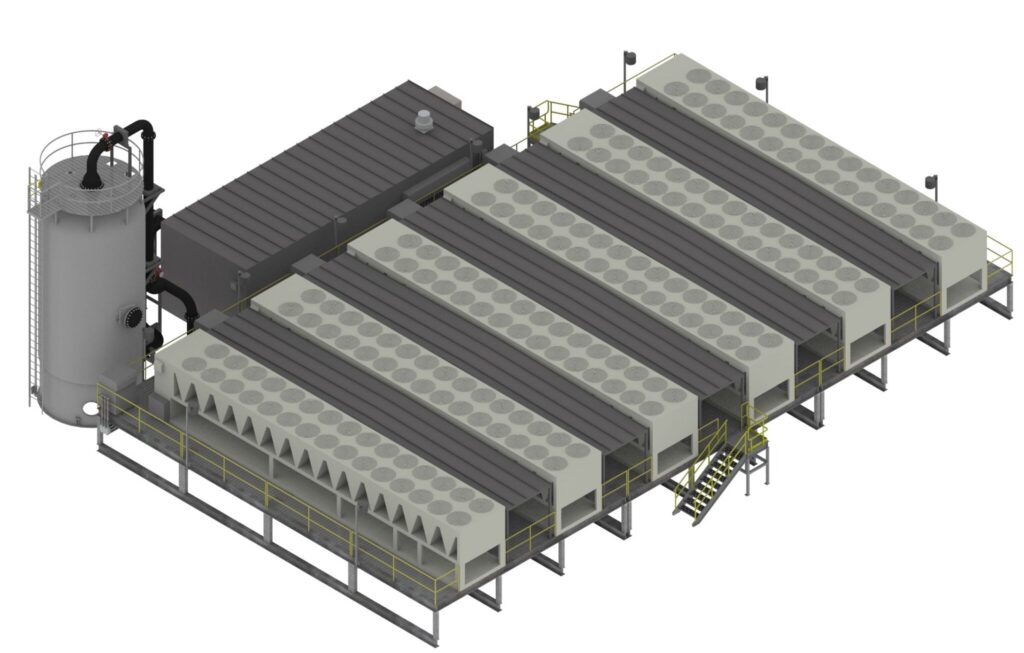
Centrifugal chillers utilizing dry-coolers present the largest potential footprint, driven primarily by the acreage required for the extensive field of dry-coolers.
If Total System Cost is a Factor
If Total System Cost is a Factor

Air cooled chillers are generally the winner here – given the relative simplicity of the systems. They are followed closely by conventional water-cooled centrifugal systems – given the relatively compact configuration and compact, highly-efficient heat rejection.
Centrifugal chillers utilizing dry-coolers present the largest potential system cost, driven primarily by the significant quantity of dry-coolers (and associated interconnecting power and piping) required to achieve heat-rejection.
Adiabatic heat-rejection systems can present very high equipment costs – but, generally speaking, less adiabatic heat-rejection equipment is required than traditional dry-cooler systems. So total system costs (including associated interconnecting power and piping) tend to be slightly lower than the dry-cooler system referenced above.